TLDR: - Search engines in 2026 rank understanding, not keyword repetition. Semantic SEO focuses on intent, entities, and topical authority instead of isolated phrases. Content built around topic systems and real user problems consistently outperforms standalone keyword pages. AI Overviews reward answer-first structure, while E-E-A-T filters out generic content. Brands that align content with how search interprets meaning see more stable, long-term visibility.
Introduction
Semantic SEO in 2026 is no longer optional. It is how search engines decide what deserves visibility. Algorithms are not counting keywords or rewarding clever placement tricks. They are evaluating whether content demonstrates genuine understanding of a topic and satisfies user intent completely.
This shift explains why many websites struggle to scale organic growth even after publishing more pages. Keyword-first SEO plateaus because it optimizes for how queries look, not what users actually mean. Modern search favors clarity, context, and depth. That is why brands working with agencies like Inqnest increasingly move toward intent-driven frameworks supported by structured search engine optimization services rather than isolated keyword tactics.
This guide explains how semantic SEO in 2026 works, why search engines evolved this way, and how content earns visibility across organic results, AI Overviews, and answer engines.
Semantic SEO in 2026 Explained
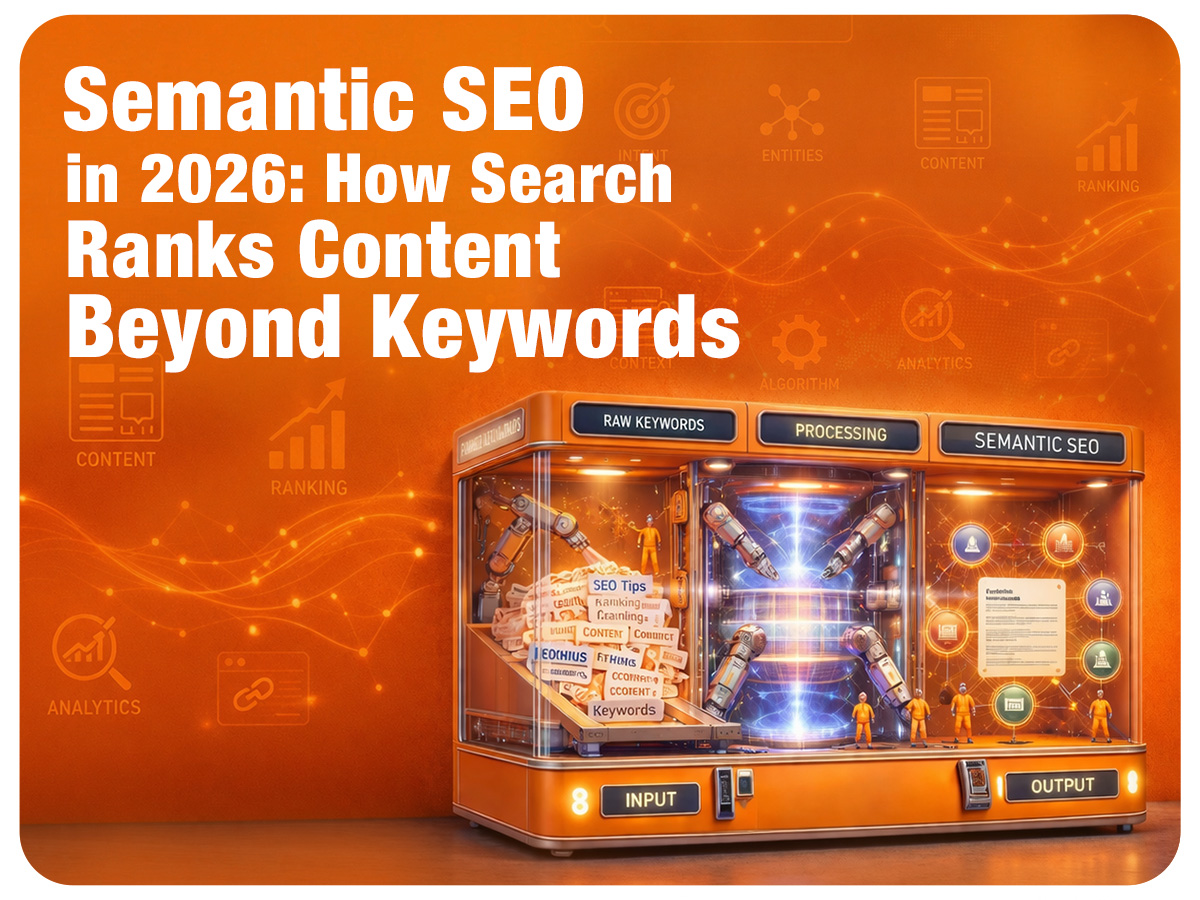
Semantic SEO in 2026 is the practice of optimizing content around meaning instead of exact-match keywords. Search engines analyze how well a page covers a topic holistically, how concepts connect, and whether the content aligns with the intent behind the query. Rankings are driven by relevance, structure, and contextual depth rather than repetition.
Why Search Engines Moved Beyond Keywords
Search engines moved beyond keyword matching because user behavior changed faster than traditional SEO models could keep up. People search using natural language, voice queries, and layered questions. The same intent can be expressed in multiple ways, making exact-match optimization unreliable.
Advancements in natural language processing allow algorithms to interpret context, synonyms, and implied meaning. Large language models further strengthened this capability by understanding relationships between ideas rather than relying on literal phrasing. As a result, pages optimized purely for keywords often feel incomplete and fail to answer the full scope of a user’s question.
Semantic SEO aligns with how modern search systems think. Instead of optimizing for what users type, it optimizes for what users want to achieve.
Core Components of Semantic SEO in 2026
Entity-based optimization forms the foundation of semantic SEO. Entities are clearly identifiable concepts such as topics, brands, tools, and ideas. Search engines use entities to map relationships and evaluate authority. Content that clearly names and explains entities builds stronger trust signals than vague or abstract writing.
Topic clusters strengthen this trust. Rather than publishing disconnected pages for individual keywords, semantic SEO organizes content into pillar pages supported by in-depth subtopics. This structure signals comprehensive understanding and helps search engines contextualize expertise across an entire subject area.
Semantic depth completes the picture. Strong content naturally includes related concepts, variations, and follow-up questions because it explains the topic fully. Research methods that focus on uncovering real user questions often reveal overlooked opportunities, especially when identifying low-competition keyword patterns tied to intent rather than volume. This approach allows content to expand coverage organically without sounding forced.
How Search Intent Shapes Rankings
Search intent now plays a defining role in visibility. Informational intent favors content that explains concepts clearly and logically. Commercial intent rewards pages that help users evaluate options without exaggeration. Transactional intent prioritizes clarity, relevance, and trust over aggressive persuasion.
Format matters as much as language. A page written like a sales pitch struggles to rank for learning-focused queries, while long explanations frustrate users ready to act. Semantic SEO succeeds by aligning structure, tone, and depth with the intent behind each search, which is why intent-matched content consistently outperforms keyword-matched content.
Advanced Semantic SEO Techniques for 2026
Generative Engine Optimization has become essential as AI-generated answers increasingly influence discovery. Content structured with clear headings, direct answers, and logical flow is easier for AI systems to interpret and summarize. Pages that follow these principles are more likely to be referenced within AI Overviews because they prioritize usefulness over optimization theatrics. Many of the same practices that improve human readability also improve AI visibility, as seen in frameworks used to rank within AI-driven search experiences.
Predictive SEO adds another layer to semantic strategy. Instead of reacting to demand, it anticipates emerging topics by tracking changes in tools, workflows, and industry conversations. Publishing early allows brands to build authority before competition intensifies.
Structured data has also evolved. Schema now supports semantic understanding by clarifying relationships between entities, authors, and content sections. Combined with strong E-E-A-T signals such as first-hand experience, original insights, and transparent authorship, structured content stands out in both traditional rankings and AI-generated responses. Modern LLM-focused SEO tools support this alignment by evaluating context and coverage without replacing human insight.
How Semantic SEO Changes Keyword Research
Keyword research in semantic SEO starts with problems, not phrases. Instead of asking what keywords to target, the question becomes what users are trying to solve. Content is then built around those problems across different stages of awareness.
Keywords still matter, but they act as signals within a broader topic system. This approach captures long-tail queries naturally, supports conversational search, and aligns content with how people actually ask questions.
This method is particularly effective for complex journeys such as B2B decision-making. Content grounded in real business challenges captures a wider range of meaningful queries while preserving topical authority. That is why many modern B2B SEO techniques prioritize intent mapping and solution-driven frameworks over isolated keyword targeting.
Measuring Semantic SEO Success in 2026
Semantic SEO success is not measured by ranking for a single keyword. It is measured by topical visibility. Pages optimized semantically appear across a broad set of related queries because they answer the topic comprehensively.
Visibility within AI-generated answers has also become a key indicator. Being referenced or summarized by AI systems signals trust and relevance beyond traditional blue links.
Engagement metrics further reinforce performance. When users spend time reading, scrolling, and interacting with content, search engines interpret this behavior as satisfaction. Semantic SEO content is designed to hold attention because it answers questions fully instead of partially.
Common Semantic SEO Mistakes Brands Still Make
- Treating Semantic SEO as Keyword Optimization with Synonyms: - One of the biggest mistakes brands make is assuming semantic SEO is just traditional SEO with better wording. When teams focus on replacing keywords with variations instead of expanding meaning, content becomes repetitive and shallow. Search engines in 2026 are highly capable of identifying redundancy. Pages that circle the same idea without adding new context fail to demonstrate real understanding, even if they appear optimized on the surface.
- Publishing Shallow Topic Clusters That Add No New Value: - Many brands adopt topic clusters in structure but not in substance. Supporting pages often repeat the same explanations found on the pillar page, offering little additional insight. Instead of strengthening topical authority, this approach fragments it. Effective semantic SEO clusters work because each page answers a distinct question, adds depth, and expands the topic in a meaningful way.
- Weak Content Architecture and Confusing Internal Linking: - Semantic SEO depends heavily on structure. When headings are vague, key concepts are buried deep in paragraphs, or internal links feel random, both users and search engines struggle to follow the logic. Poor architecture interrupts semantic signals. Strong performance comes from clear hierarchy, intentional internal linking, and predictable content flow that mirrors how users naturally explore information.
- Using AI Tools as Shortcuts Instead of Strategic Support: - Another growing issue is relying on AI tools to replace thinking rather than support it. Content generated without editorial oversight often looks complete but lacks experience, originality, and real-world insight. Search engines are increasingly effective at filtering this out. Semantic SEO does not reject AI, but it requires that AI enhances human strategy instead of automating it.
- Ignoring Intent Progression Across the User Journey: - Many pages are optimized for a single moment in the search journey and fail to account for how intent evolves. Users move from learning to evaluating to deciding, often across multiple sessions. Content that exists in isolation rarely performs as well as content designed to guide users through these stages. Semantic SEO succeeds when pages work together to support intent progression over time. Semantic SEO rewards brands that think in systems, not shortcuts. The goal is not to publish more content, but to publish content that clearly earns its place within a broader, intent-driven narrative.
Conclusion: Ranking Comes From Relevance, Not Repetition
Semantic SEO in 2026 rewards brands that understand their audience better than their competitors. Visibility is earned through clarity, structure, and depth, not by repeating keywords in different forms. Search performance now depends on systems that reflect how people think, search, and decide.
For brands looking to move beyond keyword lists and page-by-page optimization, working with a marketing agency that understands how modern search interprets intent can be the difference between short-term wins and sustainable growth. Inqnest helps businesses build semantic, AI-ready SEO strategies that align with how search works today and where it is headed next.
Frequently Asked Questions
What is semantic SEO?
Semantic SEO is about helping search engines understand what your content means, not just what words it contains. It focuses on intent, context, and how concepts relate to each other across a topic.
How is semantic SEO different from traditional SEO?
Traditional SEO optimizes for specific keywords. Semantic SEO optimizes for the problem behind the search and the full context around it.
Do keywords still matter in semantic SEO?
Yes, keywords still matter, but they act as signals within a broader topic system rather than as standalone ranking factors.
How does AI Overviews impact semantic SEO?
AI Overviews prioritize content that answers questions clearly, early, and in a structured way while maintaining strong contextual relevance.
What is the best way to start with semantic SEO?
The best starting point is to organize content into topic clusters that reflect real user intent instead of building pages around individual keywords.




.png)







.png)
.png)
.png)

.png)
