3x increase in ROI within the first 3 months.

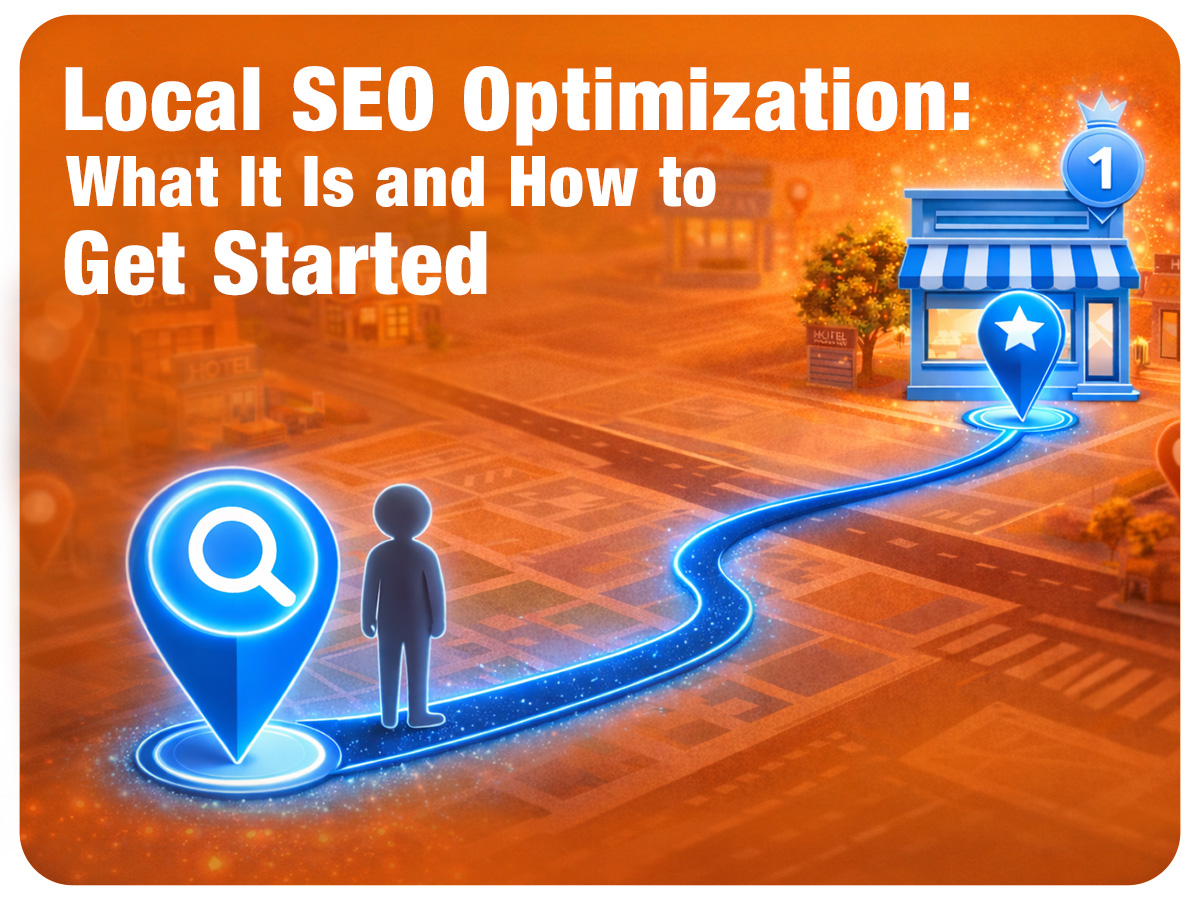
Local SEO Optimization: What It Is, Why It Matters & How to Get Started

By
Sarishma Sureshan
on
April 13, 2026
time
min read

Table of Contents

  1. What Is Local SEO Optimization
  2. How Does Local SEO Work in Digital Marketing
  3. Local SEO Optimization Strategy
  4. Local SEO Checklist
  5. How to Do Local SEO for Beginners
  6. Local SEO Optimization Tips
  7. FAQs
Local SEO Optimization: What It Is, Why It Matters & How to Get Started

TL; DR: - Local SEO optimization is the process of improving your online visibility to attract more customers from location-based searches. It involves optimizing your Google Business Profile, building consistent citations, earning reviews, and creating location-specific content. Businesses that invest in local SEO optimization show up in Google Maps, attract nearby customers actively searching for their services, and convert faster than traditional marketing channels.

Introduction

Your potential customers are already searching for you right now. They're typing "emergency AC repair," "best tacos near downtown," or "family dentist open Saturday" into their phones, and they're making decisions within seconds about which business gets their call, their visit, and their money. The difference between being the business they choose and the one they scroll past comes down to local SEO optimization, the strategy that puts your name at the top of Google Maps and local search results exactly when intent is highest.​

Local SEO optimization isn't just about ranking higher; it's about being visible in the precise geographic moments that matter most to your bottom line. For service providers, retail stores, restaurants, and any business with a physical presence or service area, local SEO agency strategies are essential for driving foot traffic, phone calls, and conversions. Google reports that 76% of people who search for something nearby on their smartphone visit a business within 24 hours. This guide breaks down everything you need to know to get started, from foundational tactics to advanced optimization techniques that turn local searches into loyal customers.​​

What Is Local SEO Optimization?

Local SEO Optimization Meaning

Local SEO optimization is the practice of improving your online presence to rank higher in location-based search results and appear in the Google Local Pack (the map section showing three businesses at the top of search results). It involves optimizing your Google Business Profile, ensuring NAP (Name, Address, Phone) consistency across the web, earning positive reviews, building local citations, and creating content that targets geographic keywords.

Difference Between Local SEO and Organic SEO

Organic SEO targets broad, national, or global audiences with content that ranks in traditional blue-link search results. Local SEO optimization, by contrast, focuses on geographic relevance and proximity, prioritizing businesses that serve specific areas. Local results appear in Google Maps, the Local Pack, and location-filtered search pages, while organic results prioritize domain authority and content depth without location bias. Both strategies matter, but local SEO optimization delivers faster conversions because it captures high-intent searchers looking for immediate solutions nearby.

How Does Local SEO Work in Digital Marketing?

  • Google's Local Ranking Factors (Relevance, Distance, Prominence): - Google uses three core pillars to determine local rankings: relevance, distance, and prominence. Relevance measures how well your business matches the search query based on categories, keywords, and user-generated content. Distance refers to how close your business is to the searcher's location or the location mentioned in their query. Prominence evaluates your overall authority through reviews, backlinks, citations, and online visibility. Businesses that optimize all three factors consistently outrank competitors in the Local Pack.
  • Map Pack and "Near Me" Search Behavior: - The Local Pack (also called the Map Pack) displays three businesses at the top of local search results with a map, star ratings, and business information. "Near me" searches have exploded in recent years as mobile users seek instant solutions. These queries convert at exceptionally high rates because they signal immediate intent, such as finding a restaurant for dinner or a tow truck after a breakdown.
  • How Google Personalizes Local Results: - Google tailors local search results based on the searcher's physical location, search history, device type, and previous interactions with businesses. A user searching from downtown will see different results than someone searching from the suburbs, even with identical keywords. Understanding how conducting an in-depth audit can reveal opportunities to improve your performance in personalized local searches.

Local SEO Optimization Strategy (Step-by-Step)

  1. Step 1: Google Business Profile Optimization: - Claiming and verifying your Google Business Profile (GBP) is the single most important action for local visibility. Fill out every section completely, including business name, address, phone, website, hours, categories, services, and attributes. Add high-quality photos (at least 10 to start), post regular updates, and respond to questions in the Q&A section. Regular posts with 250-300 characters and photos boost engagement and signal freshness to Google. Performing a thorough evaluation using a structured Google Business Profile audit can identify gaps and unlock higher rankings.  
  2. Step 2: NAP Consistency Across the Web: - Think of your business information as your digital fingerprint. Google cross-references your Name, Address, and Phone number across hundreds of platforms to verify you're a legitimate, trustworthy business. When your address shows up as "123 Main Street" on your website but "123 Main St." on Yelp, or your phone number includes parentheses in one place but dashes in another, search engines treat these as separate entities rather than one cohesive business. This fragmentation dilutes your local authority and can push you out of the Map Pack entirely. Run quarterly citation audits to catch discrepancies before they damage your rankings, and whenever you move locations or change phone numbers, update every single listing within 48 hours.  
  3. Step 3: Local Keyword Research: - Local keywords combine service terms with geographic modifiers, such as "emergency plumber in Austin" or "vegan bakery near downtown Seattle". Start by brainstorming seed keywords related to your products, services, and customer pain points. Then add location modifiers like city names, neighborhoods, zip codes, and landmarks. Use keyword research tools to evaluate search volume and difficulty, prioritizing long-tail keywords with lower competition and higher intent. Long-tail keywords such as "affordable pet grooming in Brooklyn Heights" attract more qualified leads than generic terms like "pet grooming".  
  4. Step 4: Website Optimization for Local Search: - Create dedicated location pages if you serve multiple areas, each with unique local content, customer reviews, embedded Google Maps, and geo-tagged photos. Optimize title tags, meta descriptions, headers, and URLs with primary local keywords. Implement local schema markup to help search engines understand your business type, location, hours, and services, which improves visibility in search features and answer engines that rely on structured data. Mobile optimization is critical since most local searches happen on smartphones.  
  5. Step 5: Reviews and Ratings Management: - Reviews directly impact local rankings and customer trust. Aim to collect at least one new review per week, and encourage customers to mention specific services or locations in their feedback. Respond to every review (positive and negative) promptly and professionally to demonstrate engagement. Reviews with photos and relevant keywords carry extra weight.  
  6. Step 6: Local Citations and Backlinks: - Citations are mentions of your business name, address, and phone number on third-party sites like Yelp, Yellow Pages, and industry-specific directories. Build citations on high-authority platforms first, then expand to niche directories relevant to your industry. Earn backlinks from local news sites, community blogs, chambers of commerce, and local partnerships to boost domain authority and geographic relevance.  
  7. Step 7: Local Content Marketing: - Publish blog posts, guides, and FAQs that address local search intent, such as "How to Prepare Your Roof for Chicago Winters" or "Best Neighborhoods for Family Dining in Austin". Feature local case studies, customer success stories, and community event coverage. Geo-targeted content signals relevance to both search engines and potential customers.  

Local SEO Checklist

  • Google Business Profile completed and verified
  • NAP consistency confirmed across all online listings
  • Primary and secondary categories selected accurately
  • At least 10 high-quality photos uploaded
  • Weekly posts and updates published on GBP
  • Review collection system in place (target 1+ per week)
  • All reviews responded to promptly
  • Location-based keywords researched and mapped to pages
  • Local schema markup implemented on website
  • Mobile optimization tested and confirmed
  • Citations built on top directories and niche platforms
  • Local backlinks earned from community sites
  • Location-specific blog content published regularly

How to Do Local SEO for Beginners

Start by claiming your Google Business Profile and filling out every detail with accuracy. Ensure your website includes your address, phone number, and service areas prominently on the homepage and contact page. Research 10-15 local keywords combining your services with city or neighborhood names. Add those keywords naturally to your page titles, headers, and content. Ask your first 10 satisfied customers to leave Google reviews. List your business on five major directories (Google, Yelp, Facebook, Bing Places, Apple Maps) with identical NAP information. Results typically appear within 4-8 weeks for less competitive keywords, while highly competitive markets may take 3-6 months.  

Local SEO Optimization Tips (Quick Wins)

Post on your Google Business Profile at least once per week with updates, photos, offers, or events. Upload geo-tagged photos taken at your business location or service sites to reinforce geographic relevance. Update your business hours immediately during holidays or special events to avoid frustrating customers. Encourage customers to include specific keywords in reviews, such as "best emergency plumbing service in Denver". Improve mobile page speed since slow-loading sites lose local searchers who need fast answers.

Conclusion

Local SEO optimization transforms how nearby customers discover your business, driving phone calls, website visits, and foot traffic from the people most likely to convert. By optimizing your Google Business Profile, maintaining NAP consistency, earning authentic reviews, and creating location-focused content, you build long-term visibility and trust in your community. Success requires consistent effort across multiple ranking factors, but the payoff is substantial for businesses willing to commit to the process.  Inqnest specializes in helping businesses dominate local search through comprehensive audits, strategic optimizations, and ongoing management that keeps your rankings climbing. Start with your first audit and watch your local visibility grow.

Frequently Asked Questions

What is local SEO optimization?

Local SEO optimization is the process of improving your online presence to rank higher in location-based searches and appear in Google Maps results. It focuses on relevance, proximity, and prominence to attract customers in your geographic area.  

How does local SEO work?

Local SEO works by optimizing your Google Business Profile, building citations, earning reviews, and creating location-specific content that signals geographic relevance to search engines. Google evaluates your business based on how well you match search queries, how close you are to the searcher, and how prominent you are online.  

How to rank in Google Maps?

Rank in Google Maps by fully optimizing your Google Business Profile, maintaining NAP consistency across the web, collecting regular reviews, posting weekly updates, and earning local backlinks. Completing every profile section and responding to customer interactions also boosts visibility.  

What are the top local ranking factors?

The top local ranking factors include Google Business Profile optimization, on-page signals with local keywords, online reviews, quality backlinks, citation consistency, proximity to the searcher, and behavioral signals like click-through rates.  

Is local SEO worth it for small businesses?

Yes, local SEO is especially valuable for small businesses because it targets high-intent customers in your area and competes effectively against larger brands through hyper-local relevance. Most local searchers convert quickly, making it one of the highest-ROI marketing strategies available.

USD 1.2 Bn+Revenue driven via Performance Maketing
30+Clients with a Turnover of over USD 1 Billion
95%+Client Retention Rate
10+Years of Delivering Sustained Excellence
USD 1.2 Bn+Revenue driven via Performance Maketing
30+Clients with a Turnover of over USD 1 Billion
95%+Client Retention Rate
10+Years of Delivering Sustained Excellence
roadmap-img
roadmap-img